Designer & Developer · Freelance

Cositas Deliciosas: Full website redesign · New Haven, Connecticut · 2025–2026
Surfaces
Site, TV menus, kiosk
Shipped
Both locations live
Type
Website Redesign & Brand design
Client
COSITAS DELICIOSAS
One menu, four places to change it
Cositas is a Mexican touch-and-go place in New Haven with a loyal regular crowd, and Miguel was about to open a second location. The site he had was a placeholder, but the real problem sat underneath it. The menu lived in four separate places and changing one price meant changing it in all four, by hand. That wasn't going to survive a second location.
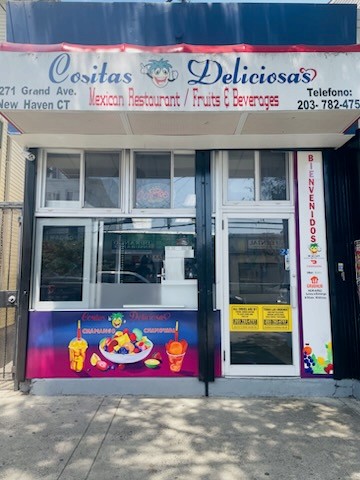
Changing one price meant changing it on the website, the TV boards, the kiosk and the ordering system. Four places, every time.
What Miguel actually needed fixed
Problem 01
No navigable menu structure
One long list with no categories. Nothing to scan, so you scroll until you find something.
Problem 02
Confusing navigation
The nav had no hierarchy. Nothing told you what was a category, what was a page, or where ordering lived.
Problem 03
Poor mobile experience
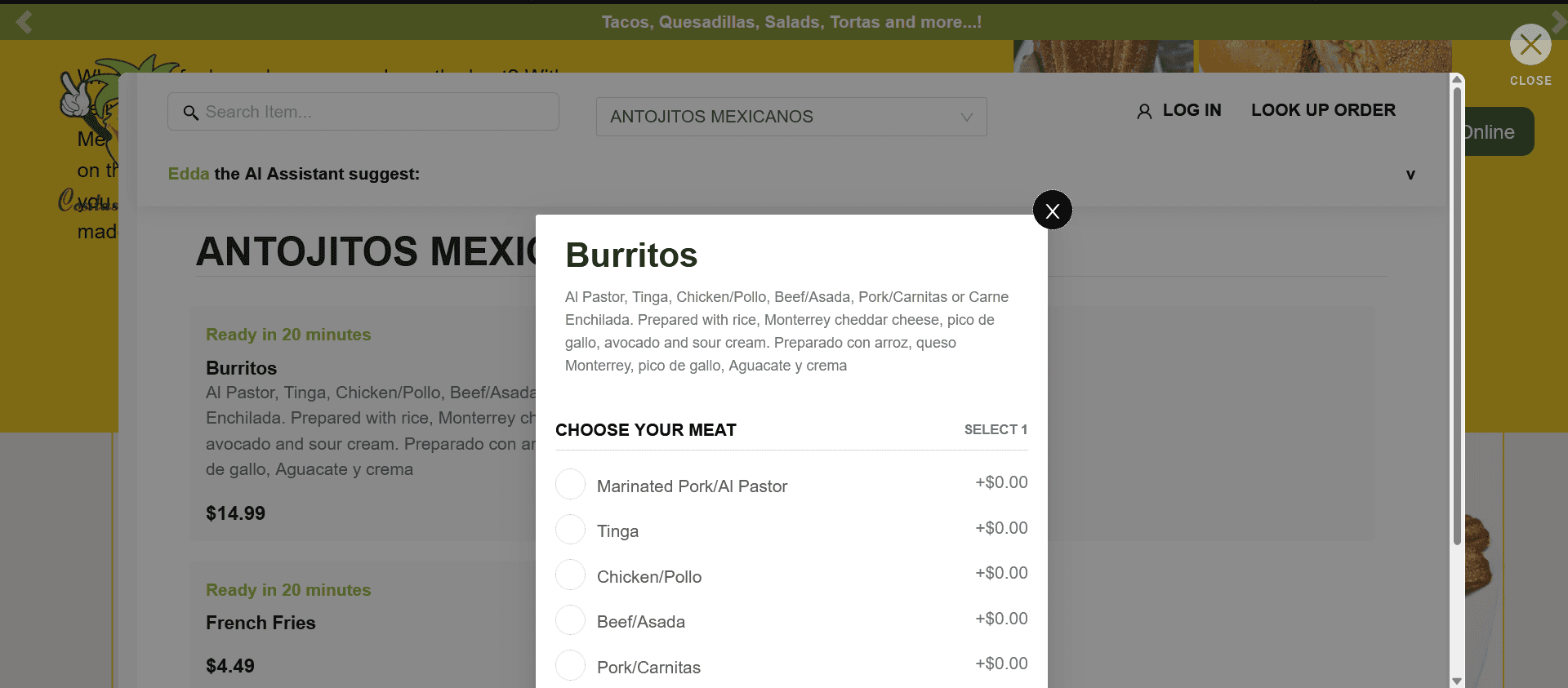
Most orders come from phones and the old site was built for a desktop. On a phone you were pinching and scrolling to read a menu.


How I approached it
Discovery
Owner interviews and a competitive audit of local restaurant sites. That is where I found the menu lived in four places and that updating it was the actual job. It set everything after it.
IA & Menu
Worked with the kitchen team to categorise every item across both locations. That made the menu scannable and gave every surface the same category list to run off. No before and after number on this, the old site was never measured.
Visual Design
Bold and warm, playful without tipping into chaos, and still looking like the place people already know.
Navigation
A custom navbar that breaks convention on purpose. On brand without breaking what people expect a navbar to do.
Development
Built and launched the full site in Framer. Fast, works on a phone, and built so the owners could maintain it without a developer.
Key decisions
The custom centred navbar: brand-playful but navigation-sound





A professional filter & sort bar to explore a large menu

01
Brand-Aligned Navigation
A centred, icon-forward navbar. It breaks the usual left-aligned convention on purpose: Cositas in store is loud and colourful, and a standard header doesn't look like the place. Everything else about it behaves the way people expect a navbar to behave.
02
Categorised Menu
Worked with the kitchen to group every item into categories across both locations. It's the same category list on the site, the TV boards and the kiosk, which is what lets one update reach all of them.
03
Mobile-First Layout
Most ordering happens on phones, so I designed the phone layout first and worked up from it instead of squeezing a desktop design down. Tap targets and thumb reach were checked on a real phone, not in a browser window.
Before
✗
Flat, unsorted menu with no categories
✗
Navigation with no clear hierarchy
✗
Desktop-only layout
✗
No ordering flow
✗
No room to scale to second location
After
✓
Categorised menu across both locations
✓
Brand-aligned custom navigation
✓
Mobile-first responsive design
✓
Direct ordering integration
✓
Scalable structure for second location
+33%
More customers ordering online at Grand Ave, Sept 9 to Oct 9, 2026, against the same dates in 2025.
2
Locations running on one menu system. Prices update once.
3
Surfaces on one design system: website, in-store TV menus and a self-checkout kiosk running on the shop floor.
What I would do differently
Measure before launch. I didn't baseline this site, so the first numbers came a year later, from the restaurant's ordering system. From September 9 to October 9, 2026, 33% more customers ordered online at the Grand Ave location than in the same dates of 2025, and orders were up 15%. The new site went live in December 2025, between those two months. That's one month at one location, and the ordering menu was also rebuilt that year by someone else, so I can't say how much of the rise is the site.
Owner-maintainability turned out to be a design claim rather than a fact. I built it so the owners could update the menu themselves. Miguel has never been set up with access, so in practice the dependency moved from the old vendor to me. Handover needed a date on it and I never gave it one.
