UX Designer
How it started
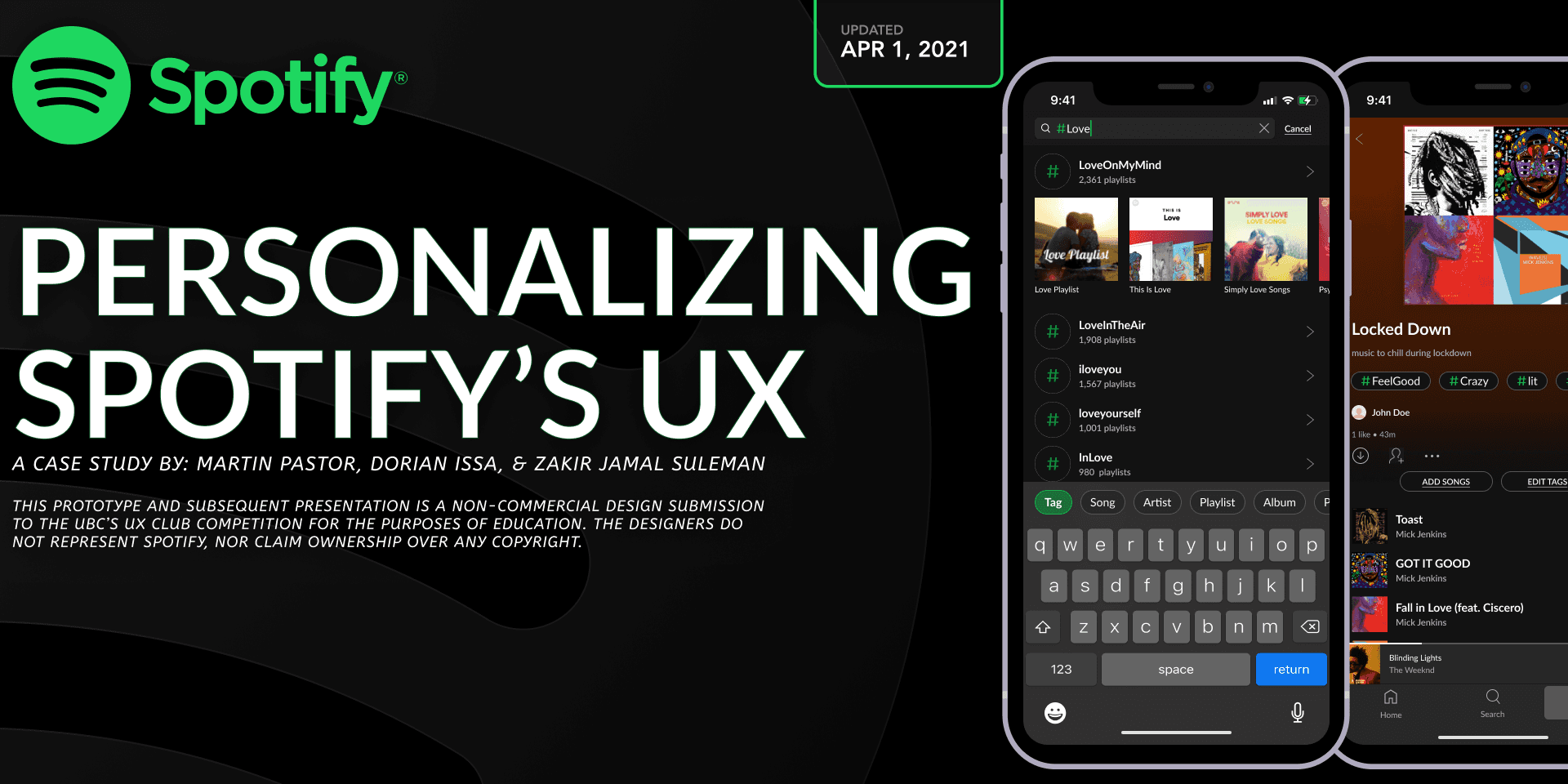
My first UX design project was to make Spotify easier to use and more personal. I teamed up with Dorian Issa and Zakir Jamal Suleman to create new features that help users organize their music and find songs faster.
Problem
Spotify suggests a lot of music, but organizing playlists and finding the right song can be tricky. Users often name playlists based on moods or activities usually naming their playlists accordingly i.e love songs are put in the Love is Love Playlist.
But playlist names are forgettable, so when you're back in a loving mood, it may be hard to find the right playlist if it's been a while since you last listened to it. Based on this intuition we tested this hypothesis:
When the mood strikes, users get frustrated when they can't find the right playlist. They want better ways to search by mood, activity, or any other way they so choose.
Solution
We created a custom tagging system that lets users add their own tags—like #Happy, #Workout, #Chill—to their playlists. This helps the user find music based on mood or activity quickly.
We also implemented search filters, so users can search by genre, mood, activity, or any other custom tagging system.
Check out the original prototype here.
How it ended
While we were finishing the project back in April of 2021, the team at Spotify had implemented search filters based on genre in the users Liked Songs. It turned out that we were working on a problem that Spotify themselves was also trying to solve, which was incredibly invalidating to see.
We're still hoping that tags are next so that the user can take more control of their music listening experience.